Dental Implants – Frequently Asked Questions (FAQ)
Deeper answers to the dental implant questions Hackensack, NJ patients ask once the basics are covered: who is not a candidate, how long implants really last, how they differ from natural teeth, and what can go wrong.
Quick answer: Dental implants are small titanium posts that replace a tooth’s root and hold a crown, bridge or full arch. Most healthy adults can have them, including older adults and people with well-controlled diabetes. In long-term reviews, about 96% of implants were still in place after 10 years. Smoking, uncontrolled health conditions and poor daily cleaning raise the risks.
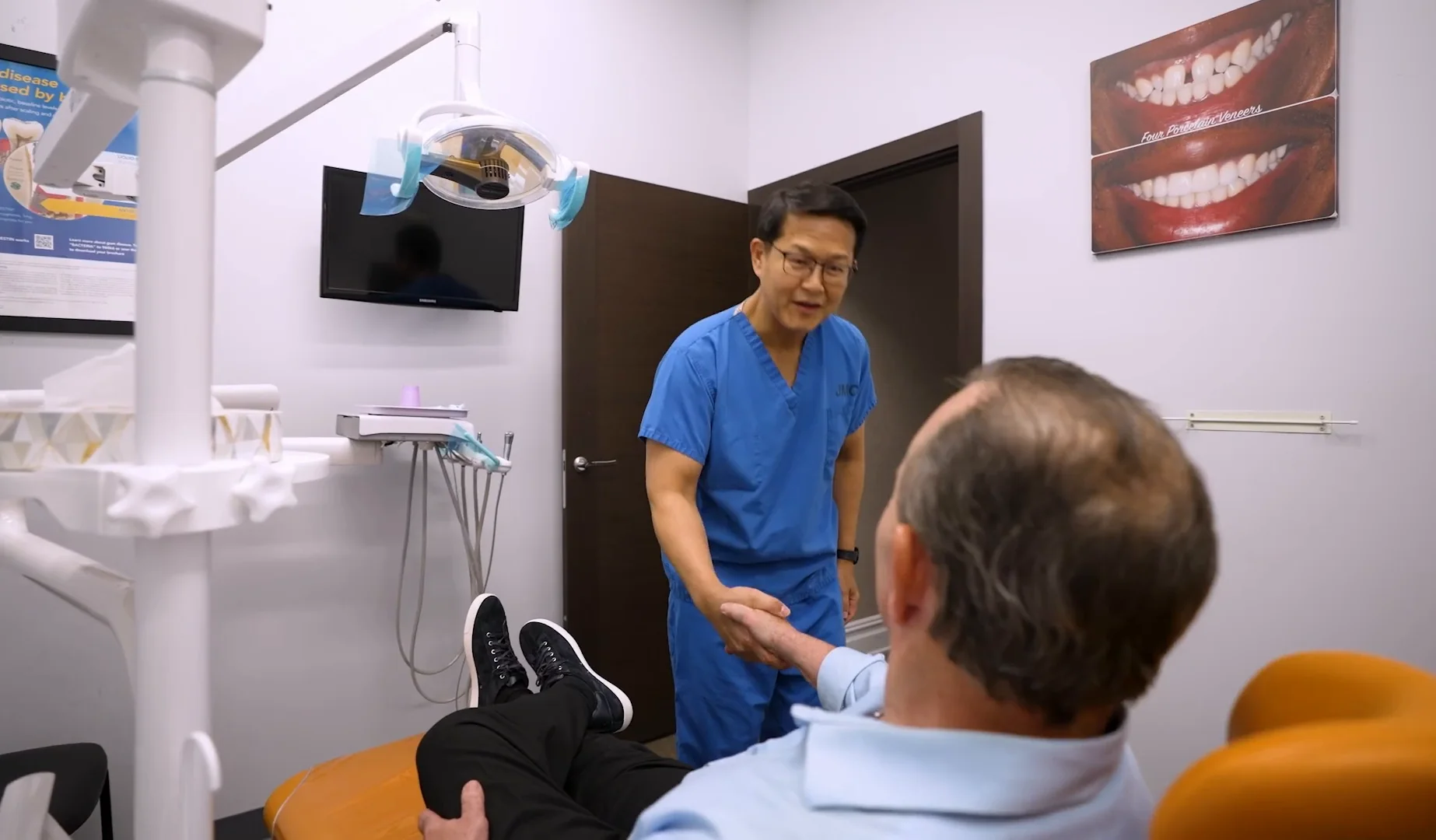
You are sitting in the consultation chair. A 3D scan of your jaw is up on the screen.
You already know the basics. Implants replace missing teeth. They look natural. They can last a long time.
Then the question you actually came with slips out: “Will this work for someone like me?”
Maybe you smoke. Maybe you take a medication for your bones. Maybe you are in your seventies and wondering whether it is worth it. Maybe a friend’s implant failed and you are worried yours will too.
The simple answer is that dental implants are one of the most predictable treatments in dentistry, and most adults are candidates.
The more honest answer is that “most” is not “everyone.” Your health, your habits and the bone under the gap all change the odds, and a good plan accounts for each one.
This guide covers the deeper questions patients ask once the basics are out of the way. For quick answers about pain, time off work, temporary teeth and sedation, see our Dental Implant FAQs page.
Who Is Not a Good Candidate for Dental Implants?
Very few people are ruled out for good. More often, a health issue means “not yet” or “yes, with extra precautions.”
These are the factors that change the plan most:
- Smoking. A meta-analysis of more than 150,000 implants found that implants in smokers had about 2.4 times the odds of failing compared with implants in non-smokers (Mustapha et al., 2021).
- Diabetes that is not under control. Poorly controlled diabetes is linked to more gum inflammation around implants and more implant loss over time. When blood sugar is well controlled, success rates are similar to those of healthy patients (Wagner et al., 2022).
- Bone-strengthening medications. Drugs such as bisphosphonates and denosumab carry a small risk of a rare jawbone complication called medication-related osteonecrosis of the jaw (MRONJ). For people taking oral bisphosphonates for osteoporosis, that risk is estimated at 0.05% or less. The same position paper recommends that patients on these drugs be told about the risk before implant surgery and kept on a regular long-term recall schedule (Ruggiero et al., 2022).
- Active gum disease. Infection around your natural teeth can spread to the tissue around a new implant, so it is treated first.
- Past radiation to the head or neck. This needs a careful review with your medical team before any oral surgery.
None of these is an automatic no.
Each one is a reason to plan more carefully, and sometimes to fix something else first.
Am I Too Old for Dental Implants?
There is no upper age limit. A systematic review of implant patients with advanced age or medical conditions reported implant survival of 96.1% at five years (Schimmel et al., 2018).
Age still matters a little. In a 10-year analysis, implant survival was lower in patients aged 65 and older, at 91.5% (Howe et al., 2019). That is still a high number, but it is a good reason to take healing, medications and home care seriously later in life.
What usually matters more than your birthday is whether your health is stable enough for a minor surgery, and whether you can keep the implant clean every day.
How Long Do Dental Implants Really Last?
“With good care, they can last a lifetime” is true for many people. Here is what the long-term research actually shows.
A review of studies that followed implants for at least 10 years found that 96.4% were still in place. When the authors applied stricter quality checks to the studies, the estimate was 93.2% (Howe et al., 2019).
Two details are worth knowing:
- “Survival” means the implant is still in your mouth. It does not mean nothing ever needed attention. Crowns can chip, screws can loosen and gums can become inflamed.
- The crown on top wears faster than the implant underneath. Replacing a worn crown is a much smaller job than replacing the implant itself.
The Biggest Difference: An Implant Is Not a Natural Tooth
An implant replaces a tooth, but it does not copy one exactly. Knowing how it differs explains most of the care advice you will hear.
A natural tooth is held in its socket by a thin cushion of fibers called the periodontal ligament. That ligament is full of sensors that tell your brain how hard you are biting. When a tooth is removed, those sensors are lost (González-Gil et al., 2022).
An implant fuses directly to the bone instead. Research shows bite sensation with implants is slightly reduced compared with natural teeth, but still very similar during everyday chewing (González-Gil et al., 2022).
The other big difference is how each one gets sick. Implants cannot get cavities. But the gum and bone around them can become inflamed when plaque builds up.
That last row is the one to remember.
Most implant problems start quietly in the gums, which is why daily cleaning and regular checkups matter so much.

Is an Implant Better Than a Bridge for One Missing Tooth?
For most people, yes. But the research comparison is less tidy than many ads suggest.
A review of traditional tooth-supported bridges found that 89.1% were still in place after 10 years. When bridges were lost, the most common reasons were decay in the supporting teeth and the bridge coming loose (Tan et al., 2004). Implants followed for 10 years survived at 96.4% (Howe et al., 2019).
Those numbers come from different studies of different patients, so they are not a head-to-head trial. The pattern is still consistent: an implant does not depend on the health of the teeth beside it, and those teeth do not need to be shaved down to hold it.
A bridge can still make sense when the neighboring teeth already need crowns. Our single tooth implant page compares the two point by point.
What Happens If I Wait to Replace a Missing Tooth?
Bone that no longer holds a tooth starts to shrink. A systematic review found the jaw ridge lost 29% to 63% of its width within six to seven months of an extraction (Tan et al., 2012).
Waiting rarely rules implants out, but it can add a bone graft and a few extra months to your plan. Even when bone loss is severe, options such as zygomatic implants may be available for some patients.
What We Look at Before Recommending Dental Implants
At our Hackensack, NJ office, which serves patients across Bergen County, nobody is told “yes” to implants from a photo or a phone call. A recommendation comes only after we have checked these things:
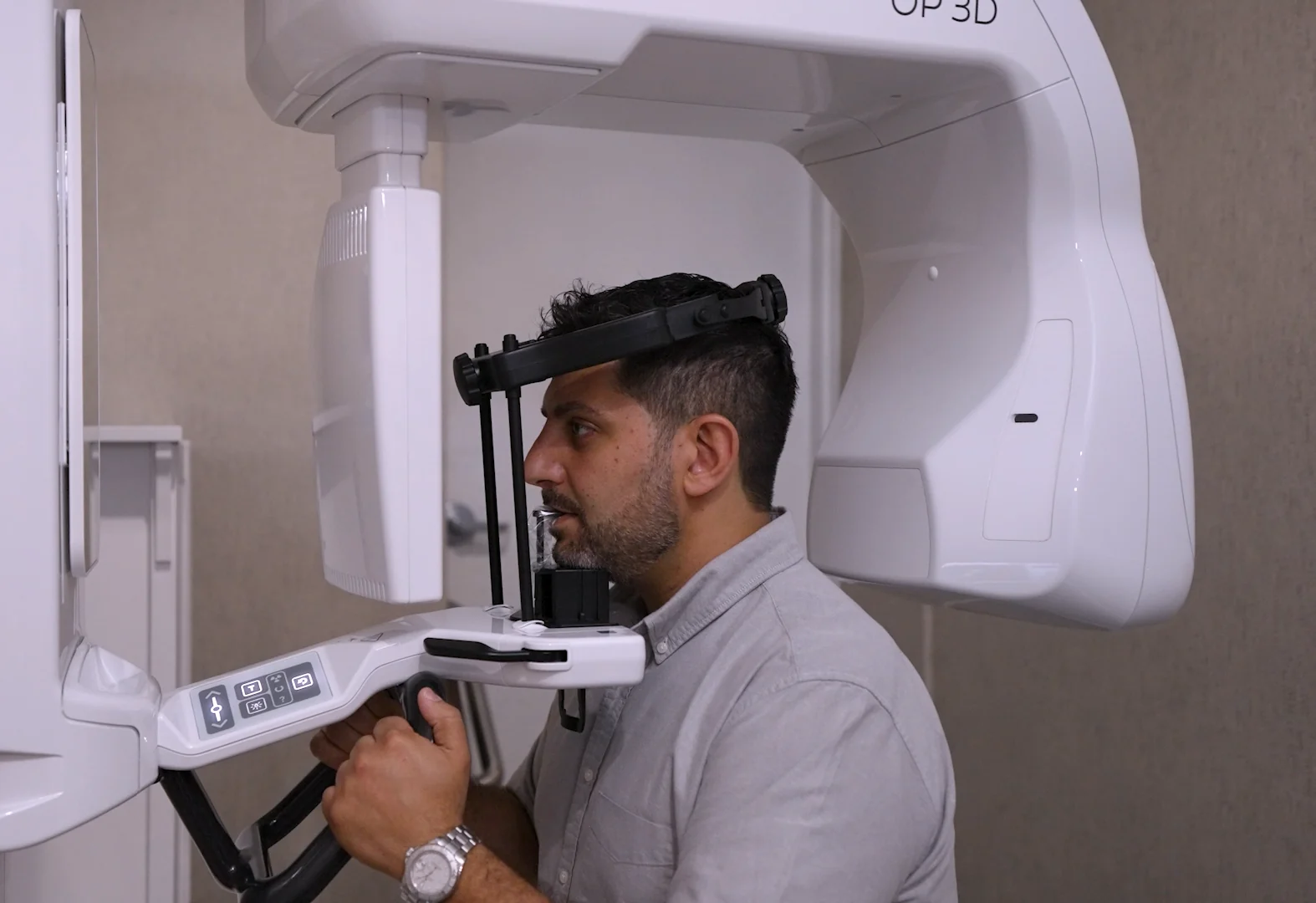
- Your 3D scan. A cone beam CT scan shows the height and width of your bone, and where nerves and sinuses sit.
- Your gums. Active gum disease is treated first, so it cannot spread to the tissue around a new implant.
- Your bite. Clenching or grinding at night can put an implant crown under more force than it should carry, so we check for it before designing your crown.
- Your health history. That includes diabetes control, bone medications and every medication, vitamin and supplement you take.
- Smoking. If you smoke, we talk about how to lower your risk around surgery.
- Your goals and budget. One tooth, several teeth or a full arch, and how you want to pay for it.
Only then do you hear which options fit, and why another option might serve you better.
What Are the Real Risks and Limits of Dental Implants?
Implants are safe and predictable, but they are still surgery. Here is what can go wrong.
- Gum and bone inflammation around implants. An expert consensus review reported average rates of 43% for peri-implant mucositis, gum inflammation that can be reversed, and 22% for peri-implantitis, which also involves bone loss (Jepsen et al., 2015). Rates vary widely between studies and patient groups.
- Implants that do not fuse. Some implants never bond with the bone and need to be removed and usually replaced after healing. Smoking more than doubles the odds of failure (Mustapha et al., 2021).
- Nerve irritation. In the lower jaw, an implant placed too close to the nerve can cause numbness or tingling in the lip or chin. Early diagnosis and treatment matter for recovery (Shavit & Juodzbalys, 2014). Careful 3D planning is how this is avoided.
- Rare jawbone complications in people taking certain bone medications, as described above (Ruggiero et al., 2022).
What lowers your risk
- Quit smoking, or at least stop around your surgery. It is one of the biggest risk factors you control (Mustapha et al., 2021).
- Keep your blood sugar in your target range before and after surgery if you have diabetes (Wagner et al., 2022).
- Clean around the implant every day, the way your hygienist shows you, including between teeth.
- Keep your maintenance visits. Gum inflammation caught early can usually be reversed before it reaches the bone (Jepsen et al., 2015).
- Tell us about every medication you take, especially anything for your bones.
The limits matter just as much.
An implant is not a fix for untreated gum disease, uncontrolled diabetes or skipped cleaning. If those problems come along, the implant inherits them.
If an implant does run into trouble, implant revision can often treat it or replace it.
How Much Do Dental Implants Cost in Hackensack?
The price depends on what is being replaced. At Hackensack Center for Dental Implants, starting prices are published as all-inclusive bundles:
- Single tooth implant: from $3,599
- Implant bridge: from $8,999
- Full-arch All-on-X: from $13,999 per arch
Bone grafts, extra extractions and treatment for gum disease can add to the total. Oral or IV sedation is available as an add-on. You leave your consultation with a written estimate.
We work with most dental insurance plans and verify your benefits before treatment. We also offer financing through Cherry, HFD, Proceed and CareCredit, and checking your options uses a soft credit check that does not affect your score. See our full cost breakdown and our insurance and financing page for details.
What Should I Ask at My Dental Implant Consultation?
A good consultation should leave you with answers, not just a price. Questions worth asking:
- Who places the implant, and who designs and places the tooth on top?
- What does my 3D scan show about my bone?
- Do I need a graft, an extraction or gum treatment first?
- What exactly is included in the price, and what could change it?
- What will I wear while the implant heals?
- How often will I need checkups once treatment is finished?
- What happens if the implant does not fuse?
Bring a list of your medications and doses, including vitamins and supplements, and any recent dental X-rays from another office. Our first visit page explains the rest.
Final Takeaways
- Most adults are candidates for dental implants, and age alone is rarely the problem.
- Smoking more than doubles the odds of implant failure. Well-controlled diabetes usually does not stand in the way.
- In long-term reviews, about 96% of implants are still in place after 10 years.
- Implants cannot decay, but the gums around them can become inflamed, so cleaning and checkups matter.
- A 3D scan, gum check, bite check and health review should come before any recommendation.
- In Hackensack, starting prices are $3,599 for a single implant, $8,999 for an implant bridge and $13,999 per arch for All-on-X.
Have a question that is not on this list? Book a consultation at our office at 163 Main Street, Suite A1, in Hackensack. You will get a 3D scan, a straight answer about your options and a written estimate. Call (551) 368-2476 or request an appointment online.
Research References
- Howe MS, Keys W, Richards D. Long-term (10-year) dental implant survival: A systematic review and sensitivity meta-analysis. Journal of Dentistry. 2019;84:9–21. https://doi.org/10.1016/j.jdent.2019.03.008
- Mustapha AD, Salame Z, Chrcanovic BR. Smoking and dental implants: A systematic review and meta-analysis. Medicina (Kaunas). 2021;58(1):39. https://doi.org/10.3390/medicina58010039
- Wagner J, Spille JH, Wiltfang J, Naujokat H. Systematic review on diabetes mellitus and dental implants: an update. International Journal of Implant Dentistry. 2022;8(1):1. https://doi.org/10.1186/s40729-021-00399-8
- Ruggiero SL, Dodson TB, Aghaloo T, Carlson ER, Ward BB, Kademani D. American Association of Oral and Maxillofacial Surgeons’ position paper on medication-related osteonecrosis of the jaws – 2022 update. Journal of Oral and Maxillofacial Surgery. 2022;80(5):920–943. https://doi.org/10.1016/j.joms.2022.02.008
- Schimmel M, Srinivasan M, McKenna G, Müller F. Effect of advanced age and/or systemic medical conditions on dental implant survival: A systematic review and meta-analysis. Clinical Oral Implants Research. 2018;29(Suppl 16):311–330. https://doi.org/10.1111/clr.13288
- González-Gil D, Dib-Zaitum I, Flores-Fraile J, López-Marcos J. Importance of osseoperception and tactile sensibility during masticatory function in different prosthetic rehabilitations: A review. Medicina (Kaunas). 2022;58(1):92. https://doi.org/10.3390/medicina58010092
- Tan K, Pjetursson BE, Lang NP, Chan ESY. A systematic review of the survival and complication rates of fixed partial dentures (FPDs) after an observation period of at least 5 years. III. Conventional FPDs. Clinical Oral Implants Research. 2004;15(6):654–666. https://doi.org/10.1111/j.1600-0501.2004.01119.x
- Tan WL, Wong TLT, Wong MCM, Lang NP. A systematic review of post-extractional alveolar hard and soft tissue dimensional changes in humans. Clinical Oral Implants Research. 2012;23(Suppl 5):1–21. https://doi.org/10.1111/j.1600-0501.2011.02375.x
- Jepsen S, Berglundh T, Genco R, et al. Primary prevention of peri-implantitis: managing peri-implant mucositis. Journal of Clinical Periodontology. 2015;42(Suppl 16):S152–S157. https://doi.org/10.1111/jcpe.12369
- Shavit I, Juodzbalys G. Inferior alveolar nerve injuries following implant placement: importance of early diagnosis and treatment. A systematic review. Journal of Oral & Maxillofacial Research. 2014;5(4):e2. https://doi.org/10.5037/jomr.2014.5402
Can I get dental implants if I have gum disease?
Usually, yes, but not until the gum disease is treated. Infection around your natural teeth can spread to the tissue around a new implant, so that work is done first and priced separately. Once your gums are healthy, implant planning can move ahead.
Can I get implants if I clench or grind my teeth?
Often, yes. Clenching or grinding at night can put an implant crown under more force than it should carry, so your bite is checked before the crown is designed. Tell us at your consultation if you wake up with a sore jaw or have been told you grind.
Will my implant crown match my natural teeth?
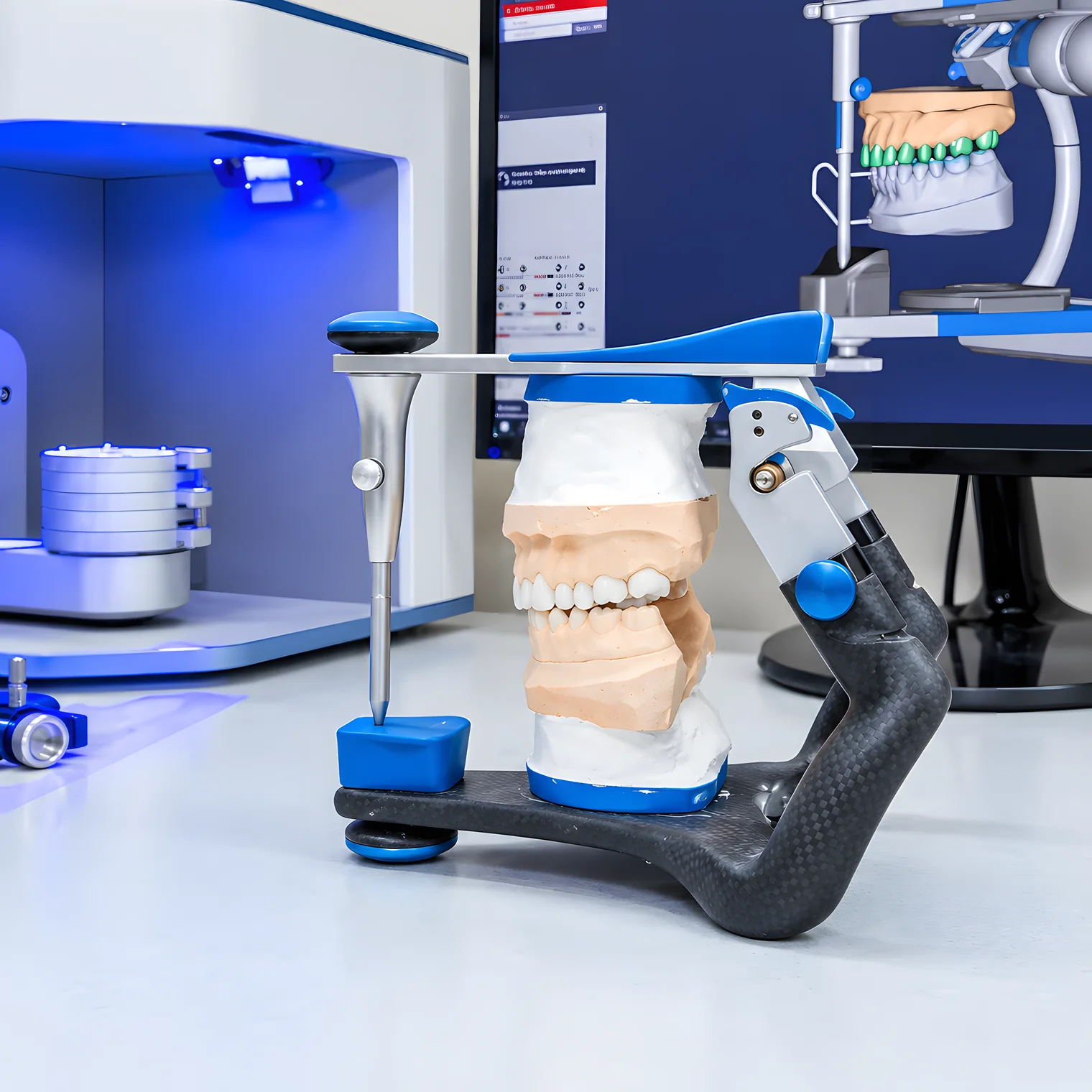
That is the goal. Crowns and bridges are designed digitally and many are finished in our on-site lab, so the shape and shade can be matched to your neighboring teeth. If you plan to whiten your teeth, do it before your crown is made.
How many implants do I need for several missing teeth?
Not one per tooth. A single tooth needs one implant, an implant bridge usually needs two, and a full arch usually needs four to six. Back-of-mouth or longer spans sometimes need an extra implant for support, and your 3D scan decides the final number.
How long does it take to get a single dental implant?
It is usually spread over a few months. Placement itself is one visit, but the post needs a few months to fuse with the bone before the final crown goes on. A graft or extraction beforehand can add time, and your written plan lays out the timeline.
Can I get a new implant if an old one failed?
In many cases, yes. A failing implant can often be treated, or removed and replaced once the area has healed, sometimes with a bone graft. Our implant revision service focuses on diagnosing why the first implant ran into trouble before replacing it.
What should I bring to my dental implant consultation?
Bring a current list of your medications and doses, including vitamins and supplements, plus your insurance details. If you have recent dental X-rays or records from another office, bring those too so we can avoid repeating images you already have.
Do you see patients from outside Hackensack?
Yes. Hackensack Center for Dental Implants is at 163 Main Street, Suite A1, in Hackensack, NJ, and serves patients across Bergen County. The office is open Monday to Friday, 10:00 AM to 6:00 PM. Call (551) 368-2476 to book a consultation.