




Implant Revision in Hackensack, NJ
What Is Implant Revision and Why Expertise Matters
Revision is harder than the original procedure, not easier. The specialist has to work out why the first attempt failed, deal with any bone or gum damage left behind, and then rebuild in a way that lasts. That takes a level of training most general dentists do not have.
This is exactly the kind of case a prosthodontist is built for. Dr. Meskin spends his days on complex implant and full-mouth work, including the cases other offices would rather refer out than take on.
Schedule Your Consultation

- Your implant is loose, painful, or feels wrong
- An infection or gum problem has developed around it
- The crown or bridge never fit or matched your other teeth
- A full-arch case does not look or function the way you were promised
- The implant failed completely and you were told it could not be redone
- You simply want an honest, specialist opinion before doing anything more
Why Patients Seek a Second Opinion
Schedule Your Consultation
What Implant Revision Can Fix
Why Patients Come to Dr. Meskin for a Revision
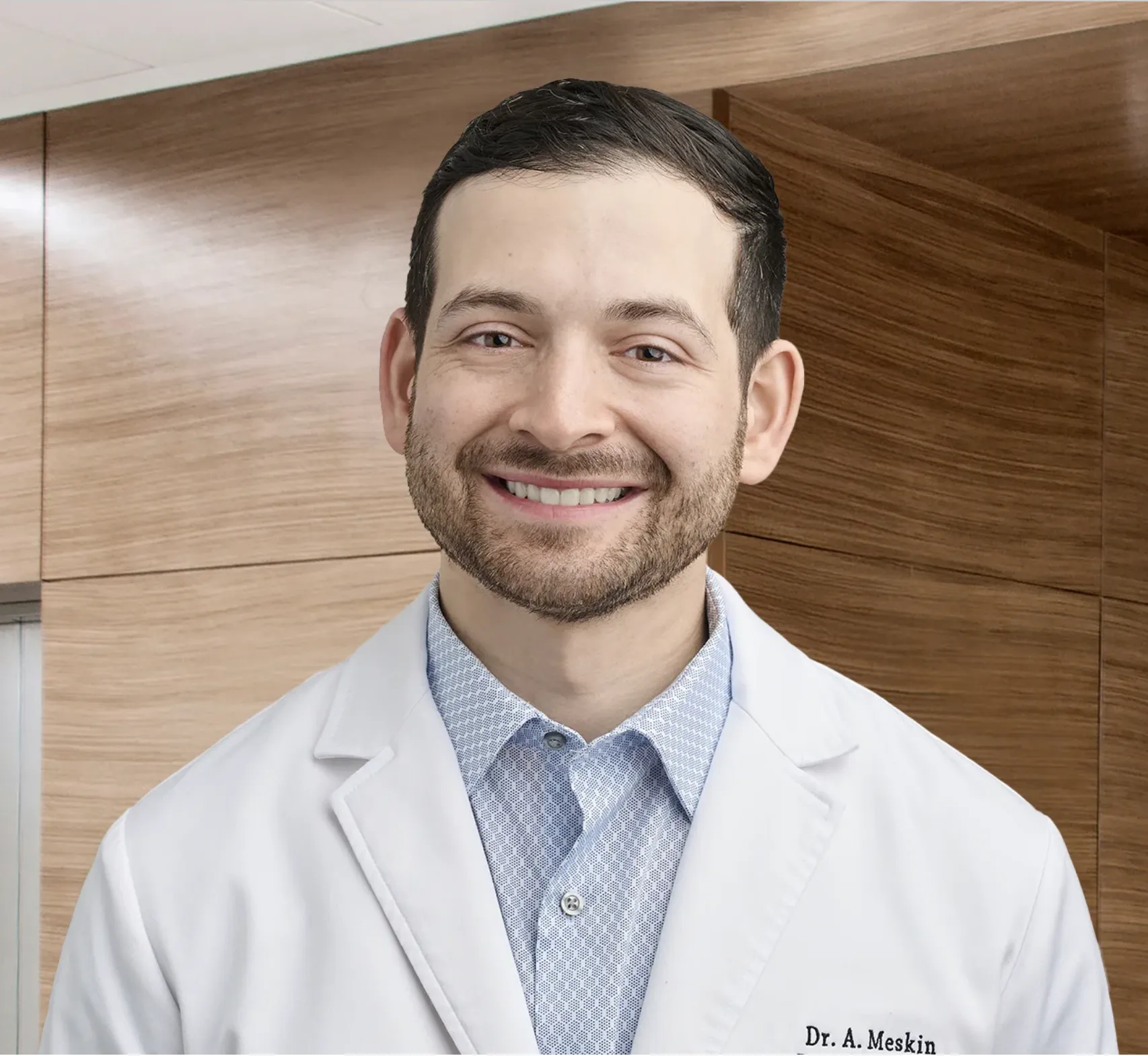
Dr. Meskin is a prosthodontist dedicated to one thing: replacing and restoring teeth so they look, feel, and function like the ones you were born with. He earned his Doctor of Dental Surgery degree and completed his specialty training in prosthodontics at NYU, then refined his implant work as an associate prosthodontist at ClearChoice, one of the largest dental implant networks in the country. Today he leads Hackensack Center for Dental Implants, where every case is planned in 3D, fabricated in an on-site lab, and designed around the patient sitting in front of him. He provides care in English, Spanish, and Russian.
Dr. Alan Meskin, DDS – Credentials
- Doctor of Dental Surgery (DDS), NYU College of Dentistry
- Certificate in Prosthodontics, NYU College of Dentistry
- Associate Prosthodontist, ClearChoice Dental Implant Centers
Dr. Alan Meskin, DDS – Recognition
- Patients describe him as an artist with a gentle touch whose restorative work looks so natural no one can tell.
- 4.7 stars on Google with over 1,000 reviews.
- Complex and referred-out cases trusted to him by other dental offices.


How Dr. Meskin Approaches a Revision
Schedule Your Consultation
Diagnostic Workup
Your first visit is where the real work happens. We review your history, examine the existing implant, and take a 3D cone beam scan to see what is going on around and beneath the site. This visit covers a lot:
- Clinical exam of the implant, gum, and surrounding teeth
- Full mouth photographs and diagnostic impressions
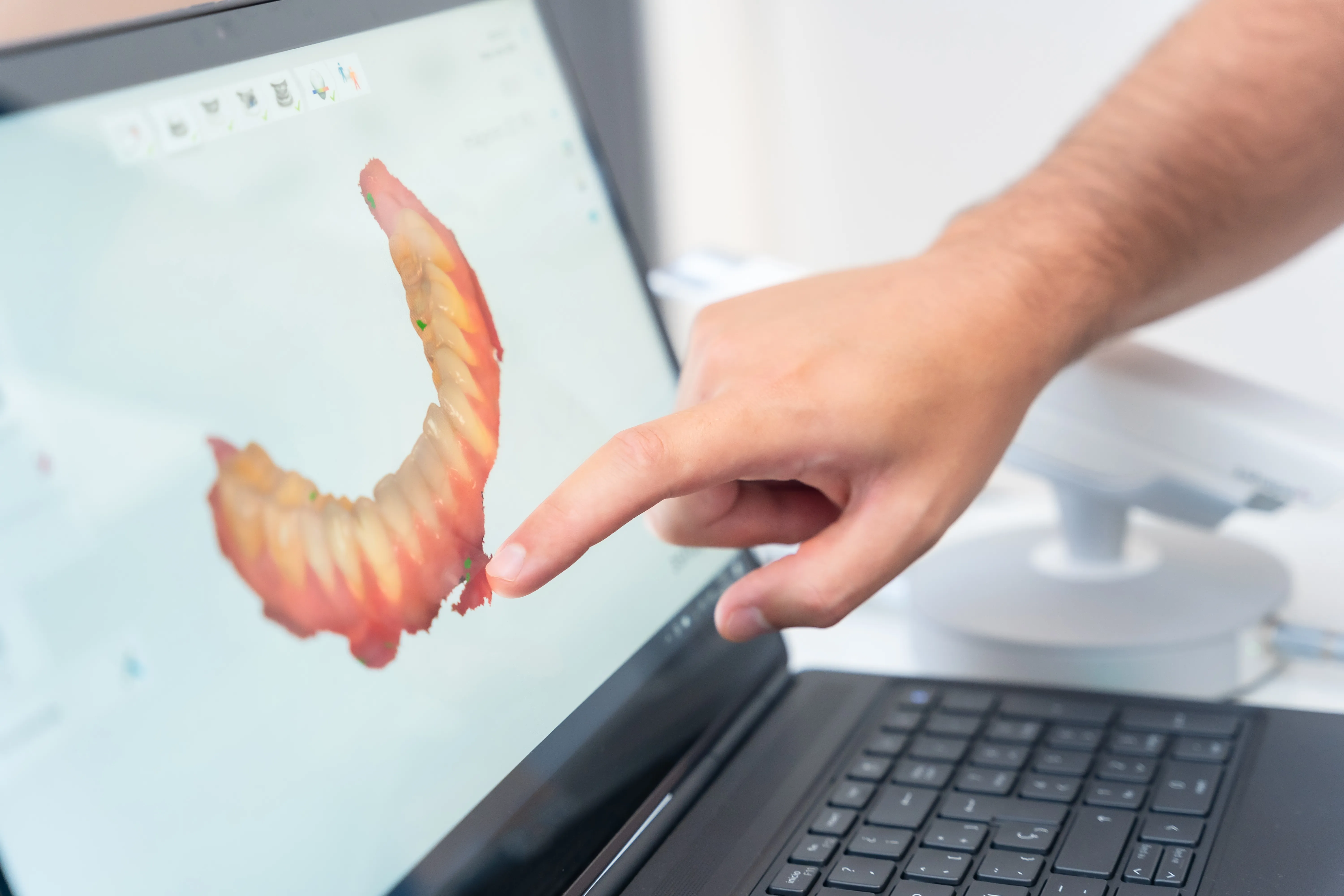
- 3D scan to measure bone loss, evaluate the implant position, and check for infection
- Review of your bite and how it loads onto the implant
- Review of any existing records or x-rays from the original placement
- A written diagnosis and plan, with a firm estimate, before anything else happens
Save or Replace Decision
Based on the workup, we tell you what the options are. Broadly, cases go one of three ways.
Non-surgical revision. The implant is sound. The problem is on top of it or in the bite. Fixed by redesigning the restoration, adjusting the bite, or treating a soft-tissue issue.
Save the implant surgically. The implant is still integrated but has infection or early bone loss around it. Treated with deep cleaning, sometimes surgery to clean the implant surface, and often a new restoration.
Remove and rebuild. The implant cannot be saved. It is removed, the site is treated, and a new implant is planned when the site is ready.
Treatment
The treatment stage depends on the path. Non-surgical revisions may be complete in one to two visits. Surgical save cases involve a small procedure and a healing period. Remove-and-rebuild cases involve removal, sometimes bone grafting, and eventually a new implant. All of it is done under local anesthetic, with sedation available if you want it.
Healing and Osseointegration
If a new implant is placed, the healing period is where bone fuses with it. That takes a few months, and revision sites sometimes take a little longer than a first-time site because the surrounding bone has already been through one procedure. We see you back for a check or two to confirm healing is on track. Studies report second implants in previously failed sites succeed at around 88 to 93 percent when the underlying cause is diagnosed and corrected first.
Final Restoration and Follow-Up
The final crown, bridge, or full-arch is made in the on-site lab, matched to the shade and shape of the teeth around it, and adjusted so the bite loads evenly across the site. From there, we see you back for check-ins to make sure the result stays healthy. Regular cleanings and follow-up are especially important for revision patients, because the goal is to make sure the cause that failed the first implant does not repeat.
Experience Exceptional Dental Care


Key Features:
- Soft credit check, no impact to apply
- 0% APR for qualifying applicants, no deferred interest
- Plans from 3 to 60 months
- Fast online application with a quick decision

Key Features:
- Options for a range of credit profiles
- Flexible terms for larger cases
- Guided by our treatment coordinators
Key Features:
- Built for larger, comprehensive cases
- Longer-term installment options
- 0% APR options for qualifying applicants

Key Features:
- Widely accepted healthcare financing
- Promotional no-interest periods when paid in full on time
- Soft credit check option to apply